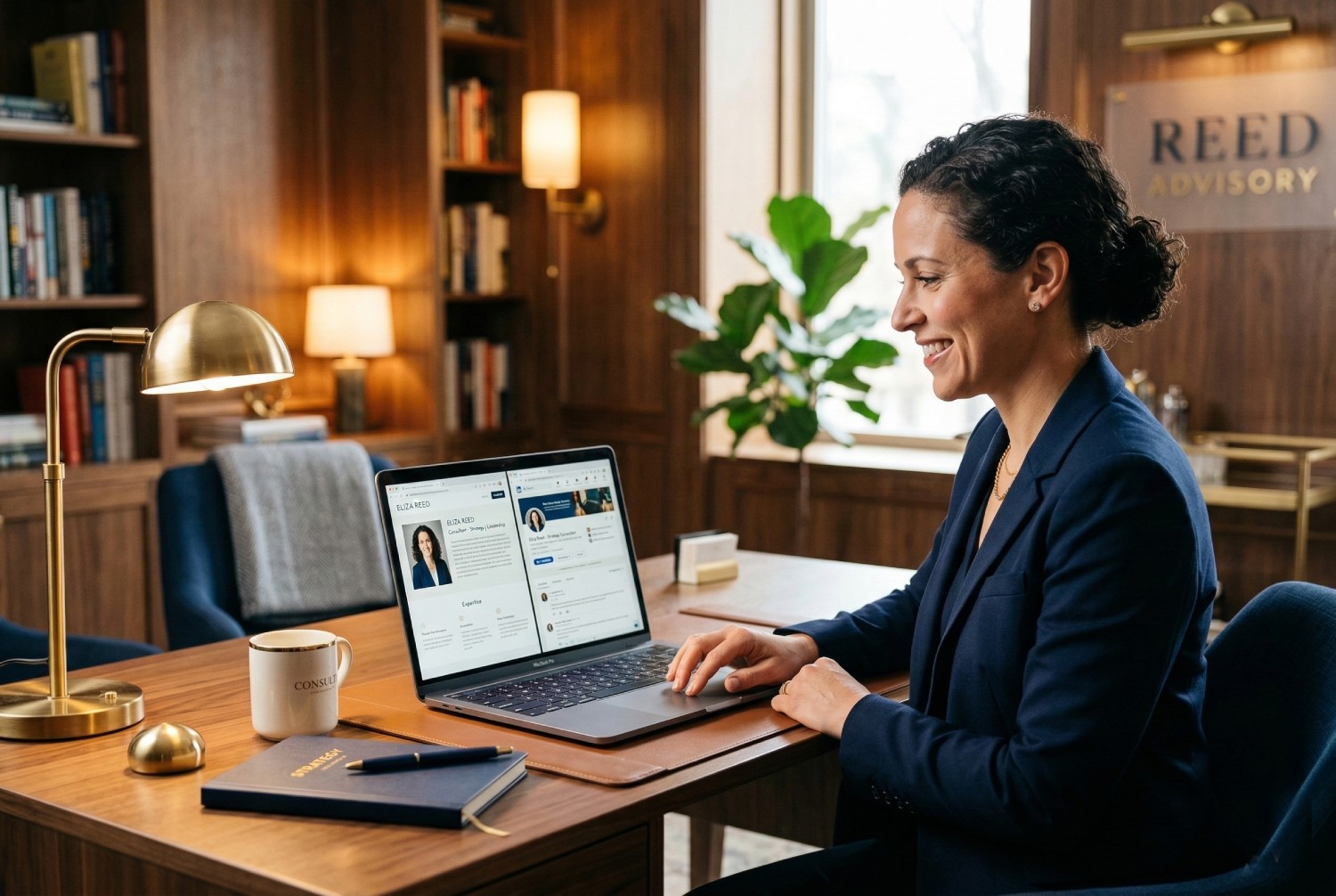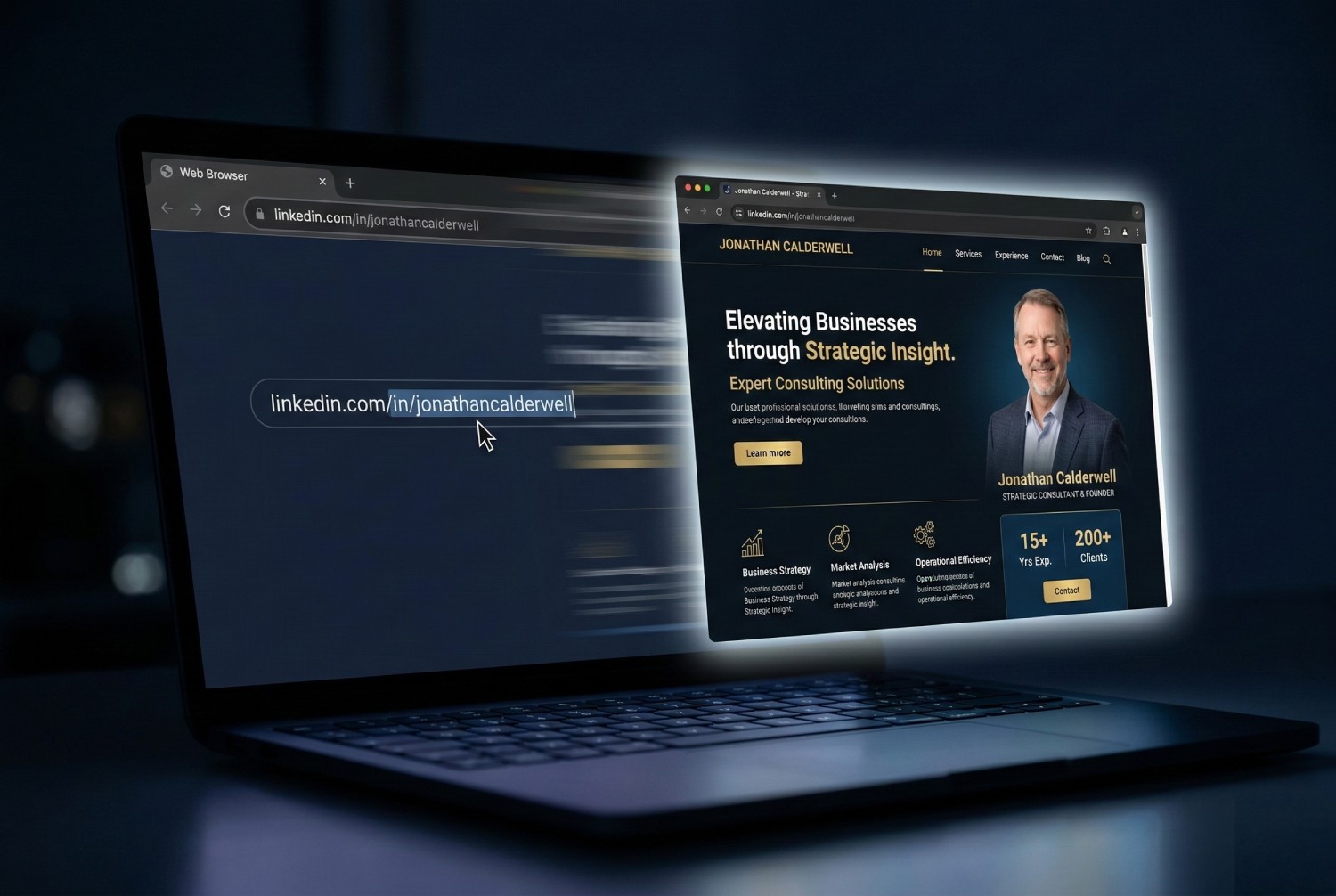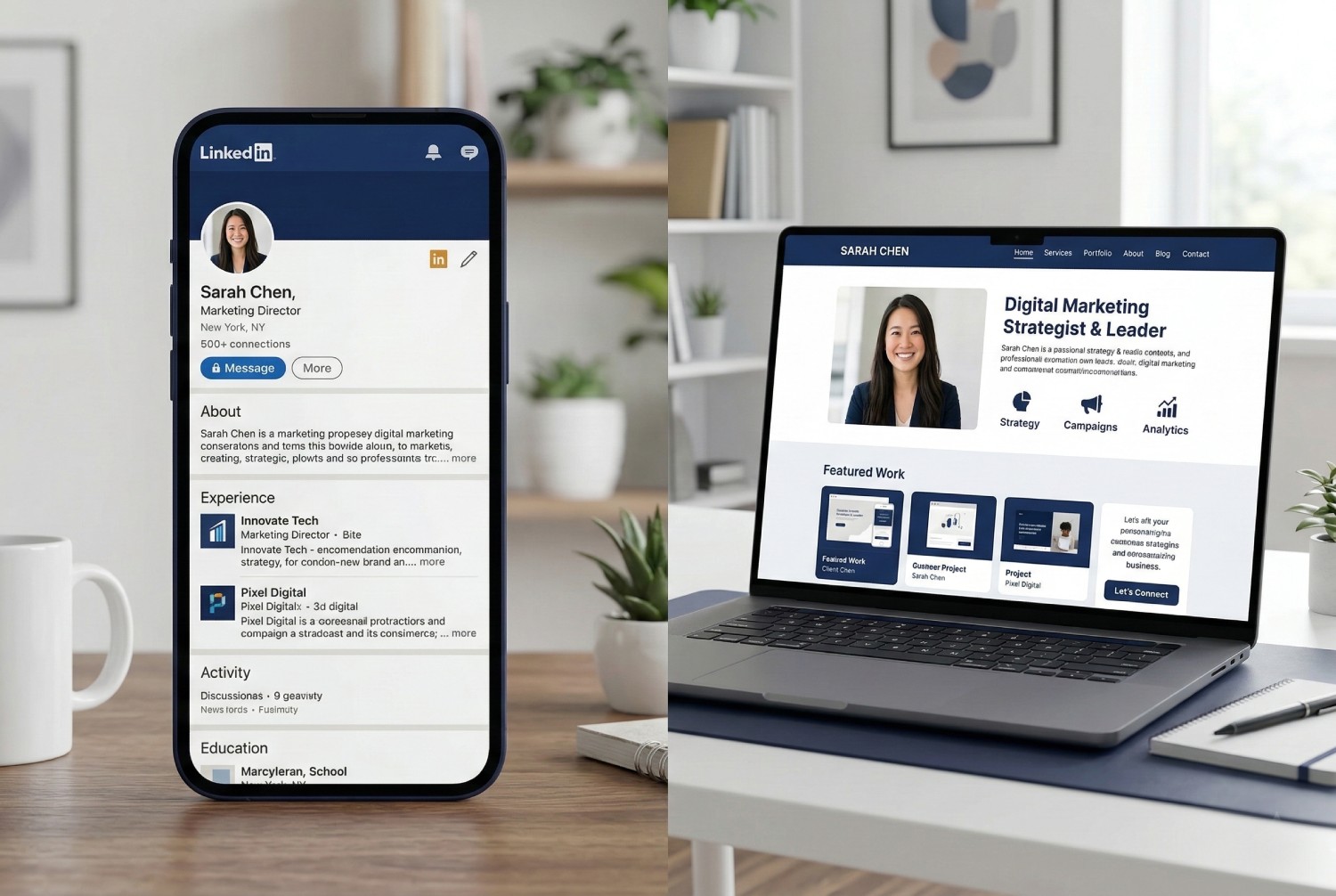
LinkedIn matters. It is where many referrals double check your background, where your posts can travel, and where people can quickly see that you are a real operator. But LinkedIn is still borrowed ground. If you are a consultant, executive coach, or fractional executive, it cannot do the full job of winning trust and turning interest into a conversation.
The gap usually shows up after a warm introduction. Someone hears your name, searches for you, and lands on a profile that looks structurally similar to millions of others. Your experience may be stronger than everyone else in the sidebar, but the format does not help you prove it. That is why a personal website still matters.
A referral needs confirmation
Referrals do not remove doubt. They simply move someone one step closer. Before they reply to the introduction, most buyers want to know three things. Are you relevant to their situation? Have you solved problems like this before? Do you feel easy to work with?
A website answers those questions faster than a LinkedIn profile can. You can lead with the exact audience you help, the problems you solve, and the outcomes clients care about. You can show a short case study, a testimonial, and a clear next step without asking the visitor to hunt for context.
LinkedIn was not built to close the loop
LinkedIn is good at visibility. It is weaker at conversion. A buyer cannot move from curiosity to a simple, well guided action in the same way they can on a website. That matters more than most professionals realize.
- You cannot shape the page around one clear offer.
- You cannot present case studies in a useful narrative format.
- You cannot guide visitors toward a booking link, contact form, or lead magnet in a focused way.
- You do not control the surrounding distractions, competitor suggestions, or platform design decisions.
You need an asset you control
A website gives you a stable home for your positioning. Your domain, your copy, your proof, and your calls to action do not change because a platform changed its layout. That control becomes more valuable as your practice matures. It lets you refine your message over time and keep the strongest version of your work easy to find.
It also helps you build beyond referrals. A specialist page for fractional finance leadership, sales advisory, or founder coaching can rank in search and bring in buyers who were never in your network to begin with. LinkedIn rarely does that job well.
The best setup is not LinkedIn or a website
The strongest professional presence uses both. LinkedIn creates reach. Your website creates conviction. LinkedIn helps people discover you. Your website helps them decide you are worth contacting.
That is why tools like VisePage resonate with independent professionals. They remove the usual friction between having a strong profile and turning that profile into a focused client facing site.
What to do next
Keep your LinkedIn profile active, but stop asking it to do a job it was never designed to do. Build a simple website that says who you help, what you solve, why clients trust you, and how to start. That shift sounds small. In practice, it changes what a referral sees in the first two minutes, and those two minutes often decide whether the conversation happens at all.