LinkedIn vs. Personal Website: What Independent Professionals Need to Know in 2026

VisePage Team
March 16, 20267 min read
LinkedIn vs. Personal Website: What Independent Professionals Need to Know in 2026

Do I need a personal website if I already have a LinkedIn profile?

It is one of the most common questions independent professionals ask — consultants, fractional executives, executive coaches, and advisors who have invested years building a strong LinkedIn presence and are now wondering whether a separate website is actually worth it.

The framing implies a choice: LinkedIn or a website. That framing is wrong.

The right question is not which one to use. It is what each one does, where each one is irreplaceable, and how they work together to build the kind of professional presence that consistently generates inbound enquiries — regardless of your role.

What LinkedIn Does Better Than Any Personal Website

LinkedIn is genuinely exceptional at several things, and it would be a mistake to understate them.

Professional network reach

LinkedIn has over a billion members. The professional connections you have built there represent a real and valuable audience. Content you publish can reach that audience directly and often far beyond it through shares and algorithmic distribution. No personal website replicates this. You do not build a following on your website; you earn it through other channels and route it there.

Discovery within LinkedIn's ecosystem

When a company researching fractional CFO candidates, a referred prospective coaching client, or a potential consulting buyer wants to look you up quickly, LinkedIn is usually the first place they go. Your LinkedIn profile is your presence within that ecosystem, and being absent or having a thin profile sends a negative signal to anyone who checks.

Social proof through recommendations

LinkedIn recommendations carry weight precisely because they are tied to real, verifiable professional identities. A recommendation from a named former client, a CEO you coached, or a board member you advised is credible in a way that an anonymous testimonial on a personal website simply is not.

Real-time content distribution

Publishing on LinkedIn puts your thinking in front of your connections immediately. For a fractional executive sharing a point of view on a sector challenge, or a coach writing about a leadership pattern they observe across clients, this is a content distribution advantage your website cannot match without an established email list or significant organic search traffic.

What a Personal Website Does Better Than LinkedIn

The list is equally significant — and it covers the capabilities that matter most for converting interest into paid work.

Owning your first impression on Google

When someone Googles your name after a referral, a speaking engagement, or a LinkedIn connection, LinkedIn is typically one of the top results. But a personal website at yourname.com can appear above it, and it is entirely yours: designed, positioned, and structured around your professional practice — not a social network profile sitting alongside every other professional on the platform.

Booking and payment integration

A VisePage Pro site includes Calendly booking and Stripe payment integration. A visitor can schedule a fractional engagement conversation, book a coaching discovery call, or pay for a paid consultation directly from your website. No redirect. No follow-up email asking about availability. One click from interested to booked.

LinkedIn has no equivalent. A visitor who wants to book time with you must message you and wait, or search for a Calendly link buried somewhere in your profile. That friction costs you conversions every day.

Structured case studies and proof

The most powerful content on any independent professional's website is specific, outcomes-rich proof of work. A fractional CFO showing how they helped a Series B company extend runway by 14 months. An executive coach describing a client who moved from chronic overwhelm to a VP promotion in six months. A strategy consultant detailing the market entry framework that produced $8 million in new revenue.

LinkedIn's format cannot accommodate any of this properly. A website gives it the space, structure, and visual weight it deserves.

SEO and Google discoverability

LinkedIn profiles rarely rank on Google for role-and-specialty search terms. A personal website can rank for "fractional CFO for SaaS startups," "executive coach for first-time leaders," "strategy consultant for family businesses," or "fractional CMO for B2B companies." This is an organic traffic source that compounds over time and generates enquiries with no ongoing spend once established.

Lead capture

A personal website with an email capture form gives you a channel that no platform controls. Every subscriber is a prospective client, referral source, or advocate you can reach directly — regardless of algorithm changes or platform policy shifts.

Full control over format and presentation

Your website is yours. The design reflects your positioning and the nature of your practice. An executive coach's website looks and feels different from a fractional CFO's, because the buyer is different and the proof that matters is different. A personal website lets you make those distinctions. LinkedIn does not.

How They Work Together

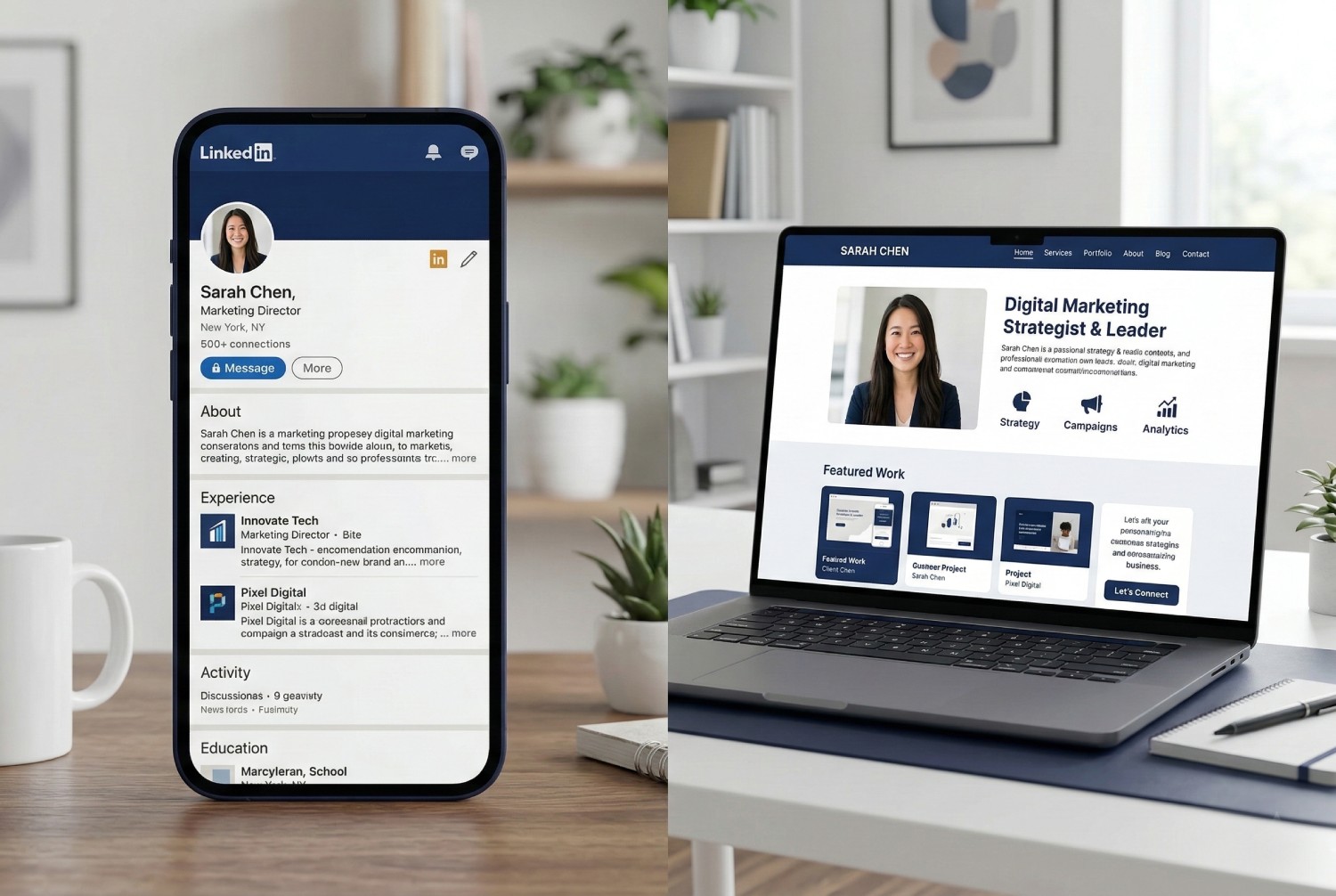
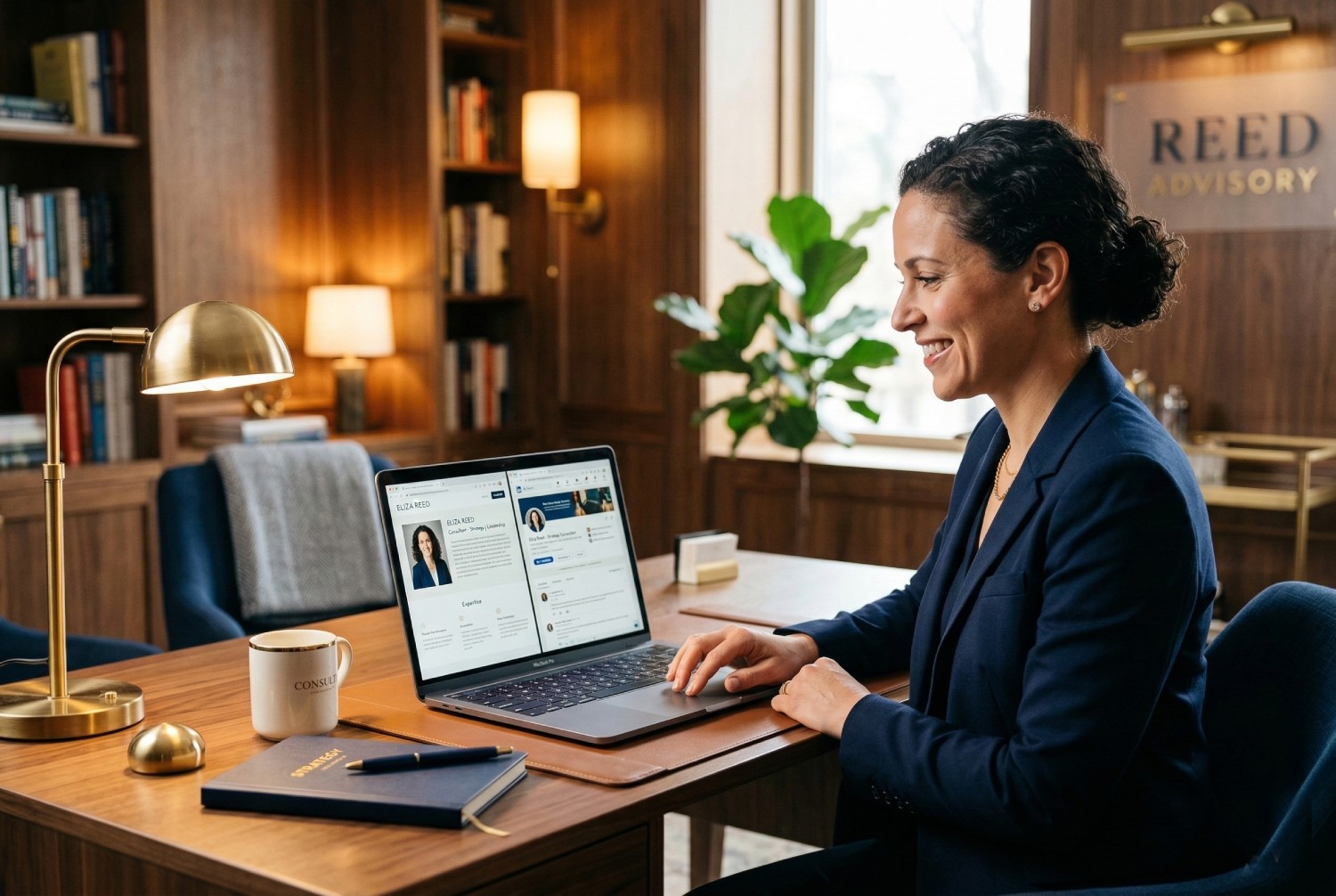
The most effective approach is not choosing between LinkedIn and a website. It is using them together, each reinforcing the other.

LinkedIn is your broadcast channel. Your website is your conversion engine. LinkedIn drives people toward you. Your website converts them into clients.

In practice the flywheel works like this. A fractional CMO publishes a post on LinkedIn about a specific demand generation mistake they see consistently in Series A companies. The post reaches their connections and spreads. Interested readers click through to the profile, which links to their website. The website shows campaign results, case studies, and a booking link for a growth assessment call. The visitor books. That first conversation converts to an engagement. The new client becomes a testimonial and a referral source.

The same flywheel works for a coach, a consultant, or an advisor. LinkedIn without a website loses most of its conversion potential. A website without LinkedIn lacks the distribution to reach new audiences consistently.

The LinkedIn Is Enough Myth

Many independent professionals tell themselves LinkedIn is sufficient because they have always found work through referrals and have never felt the absence of a website. This reasoning has two blind spots.

First, referred prospects still Google you. If the referral is warm and the timing is right, they may reach out regardless of what they find. But if they land on a LinkedIn profile with no dedicated professional presence, a smaller percentage follow through. A professional website with case studies and social proof converts referred prospects at a meaningfully higher rate — regardless of whether you are a coach, a consultant, or a fractional executive.

Second, referrals are not a scalable channel. They do not compound. They do not generate inbound enquiries while you are delivering on another engagement. An established professional website with good SEO does. Building it takes time, but the independent professionals who invest in it early are building an asset that generates leads for years. The ones who delay are simply delaying that compounding.

The Setup Is Now 90 Seconds

For years the practical objection to building a personal website was legitimate. It took significant time, required design skills or budget, and started from a blank page that most coaches and fractional executives found paralysing.

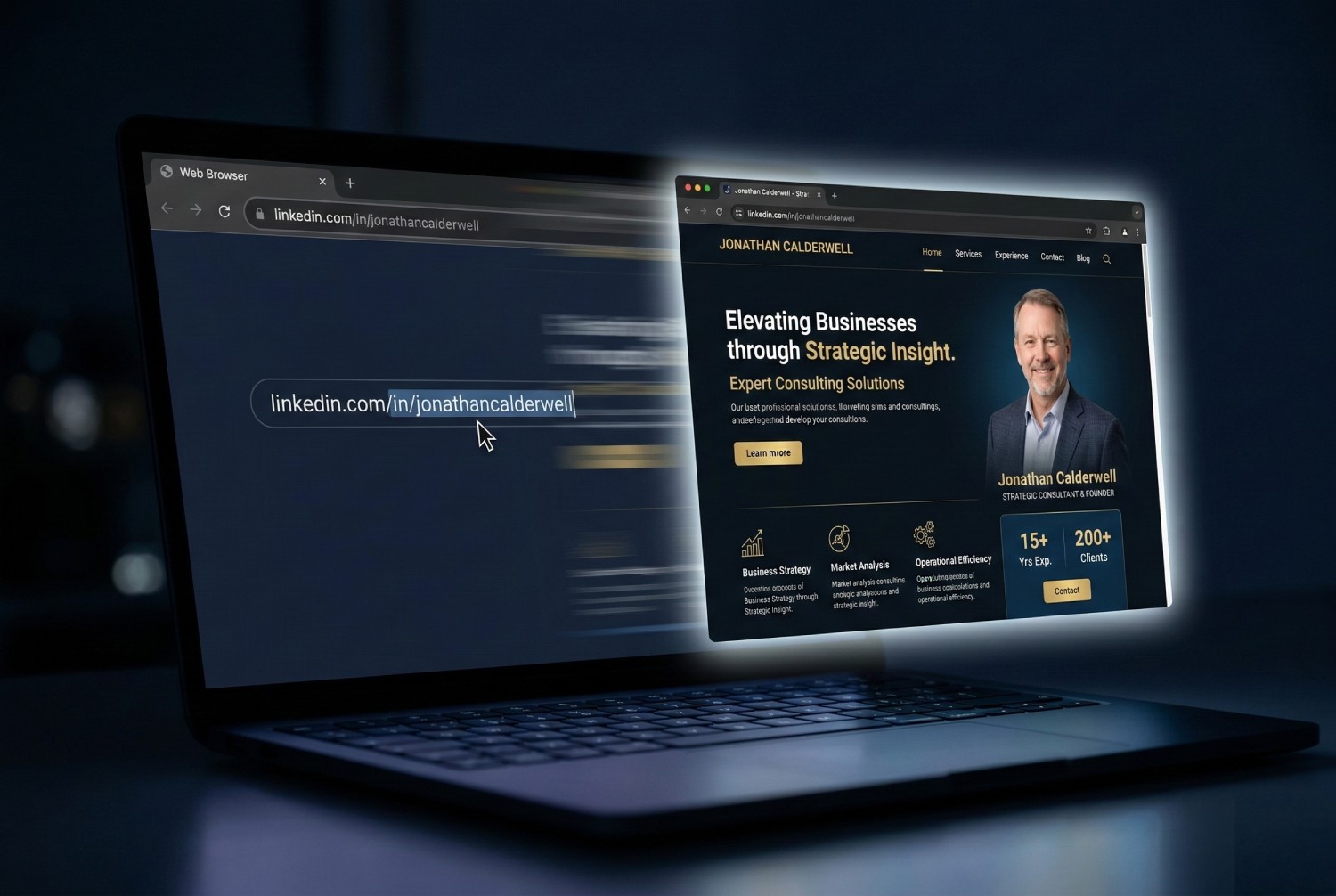
That objection no longer holds. VisePage builds a role-specific website from your LinkedIn PDF. Download your profile, upload it to VisePage, see your complete preview built in 90 seconds, choose the template designed for your specific role, and publish. The blank page problem is solved.

For a professional charging serious rates — whether as a fractional executive, a coach, or a consultant — there is no longer a sensible argument for having only LinkedIn. The combination of LinkedIn for reach and your website for conversion is available to anyone willing to spend 30 minutes building it.