Create an Executive Coach Website That Earns the Discovery Call
A strong executive coaching website should create trust, client-fit clarity, and momentum toward a discovery conversation. The page should feel calm and credible, not salesy, and give the right client a reason to book.
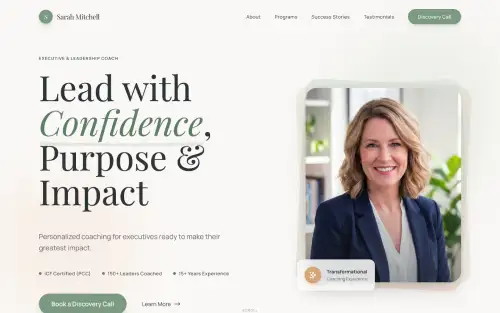
Executive Coach
Warm, narrative-driven layout focusing on personal transformation and trust.

Why an Executive Coach Website Must Build Trust Early
Prospects evaluate personal fit, coaching philosophy, and evidence of transformation before they ever book time.
Generic business-page structure often fails to communicate the emotional depth and practical value of coaching work.
Coaching decisions are personal, so visitors need both credibility and relational clarity before booking.
A focused coaching website creates a safe, structured way for senior leaders to evaluate fit without pressure.
LinkedIn vs a Trust-First Executive Coaching Website
LinkedIn helps prospects discover your background. Your executive coaching website should help them feel confident enough to take the next step.
Standard Profile
Status Quo
- Buyer impressionLooks like a profile
- Proof formatBrief wins with limited context
- Offer clarityOften implied or fragmented
- Next stepGeneric contact options
- Search potentialMostly tied to the platform
- What someone can share internallyA quick background check
Professional Platform
Recommended Strategy
- Buyer impression Shows what you help with and why it matters
- Proof format Transformation stories with emotional and practical specificity
- Offer clarity Coaching philosophy plus program formats and investment clarity
- Next step A low-pressure discovery call CTA with confidentiality cues
- Search potential A page written around executive coach searches
- What someone can share internally A page a referral can pass around before the call
What an Executive Coach Website Must Communicate Before Someone Books
These sections create a trust-oriented journey that balances emotional fit, practical details, and conversion clarity.
- Clear client profile, leadership moments, and coaching outcomes
- Coaching philosophy plus program formats and investment clarity
- Transformation stories with emotional and practical specificity
- A low-pressure discovery call CTA with confidentiality cues
Turn Your LinkedIn Profile Into an Executive Coaching Website
Publish a clear first version, then refine tone and objection handling based on the questions right-fit clients ask most.
Start with your profile
Import baseline profile copy and remove abstract language that hides your coaching approach.
Be clear about fit
Define the leaders you serve, transformation outcomes, and how engagement is structured.
Add proof people can scan
Add stories and testimonials with context so prospects can see the depth and relevance of your work.
Make the next step obvious
Use one primary CTA that matches your intake model, such as a discovery conversation.
Keep it updated
Continuously update client outcomes and positioning as your coaching practice evolves.
What an Executive Coaching Website Should Make Someone Feel
This mix of sections helps a coaching page feel credible, warm, and easy to trust.
Trust-building hero
Guide visitors from resonance to commitment with calm, clear section logic.
Coaching philosophy section
Make your approach and client experience feel tangible before the first call.
Program pathway cards
Show format, duration, and expected outcomes transparently.
Discovery-call intake
Move right-fit leads into conversations with the right context.
Who Searches for Executive Coaches Before Reaching Out
When your message reflects these profiles, prospects arrive with more context and clearer intent.
- Newly promoted leaders building executive presence
- Senior leaders navigating transition or burnout
- Founders scaling into complex leadership roles
- HR and talent teams sourcing external coaching support

How to Position an Executive Coaching Website for Search and Fit
Use language that reflects the transformation your clients seek, not only your coaching philosophy.
Balance empathy with practical structure so buyers can understand how coaching works and what changes they can expect.
Keep LinkedIn and website narratives aligned to reduce trust friction during evaluation.
Treat your page as a living reflection of your current coaching outcomes and ideal client focus.
Executive Coaching Website Trust Blueprint
Hero and positioning
Help the right buyer know they are in the right place
Clear client profile, leadership moments, and coaching outcomes
Proof and trust
Give them enough evidence to keep reading
Transformation stories with emotional and practical specificity
Service scope
Explain what working together actually looks like
Coaching philosophy plus program formats and investment clarity
Questions and fit
Answer the doubts people already have
Use FAQs and buying cues that match how executive coach work gets evaluated
Final CTA
Make the next step easy to say yes to
A low-pressure discovery call CTA with confidentiality cues
Executive Coach Website FAQ
What matters most on a coaching website?
Should I publish coaching prices?
Can I combine corporate and private coaching offers?
Coaching buyers commit when trust and clarity appear together.
Launch an executive coaching website that reflects your depth and attracts right-fit conversations.