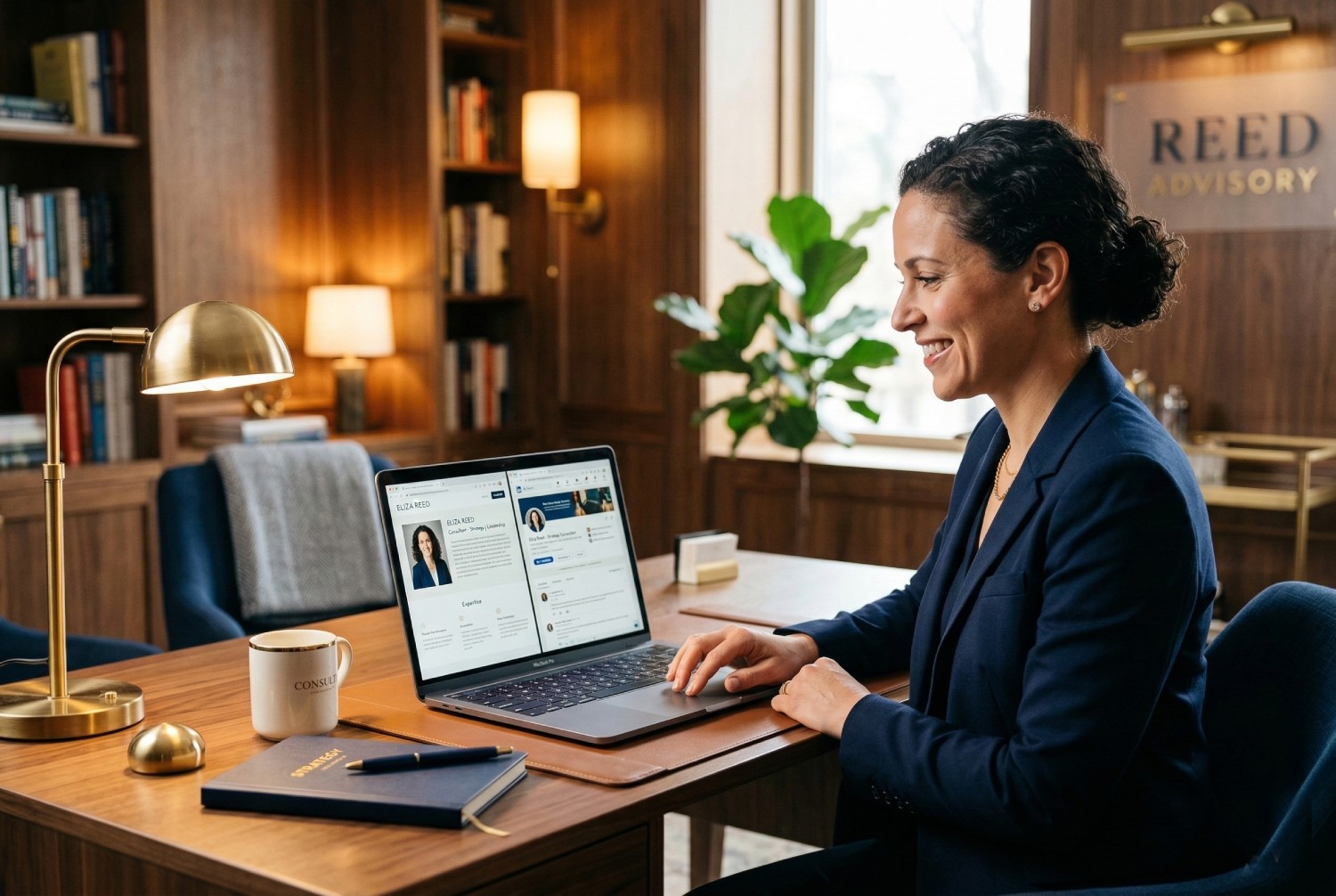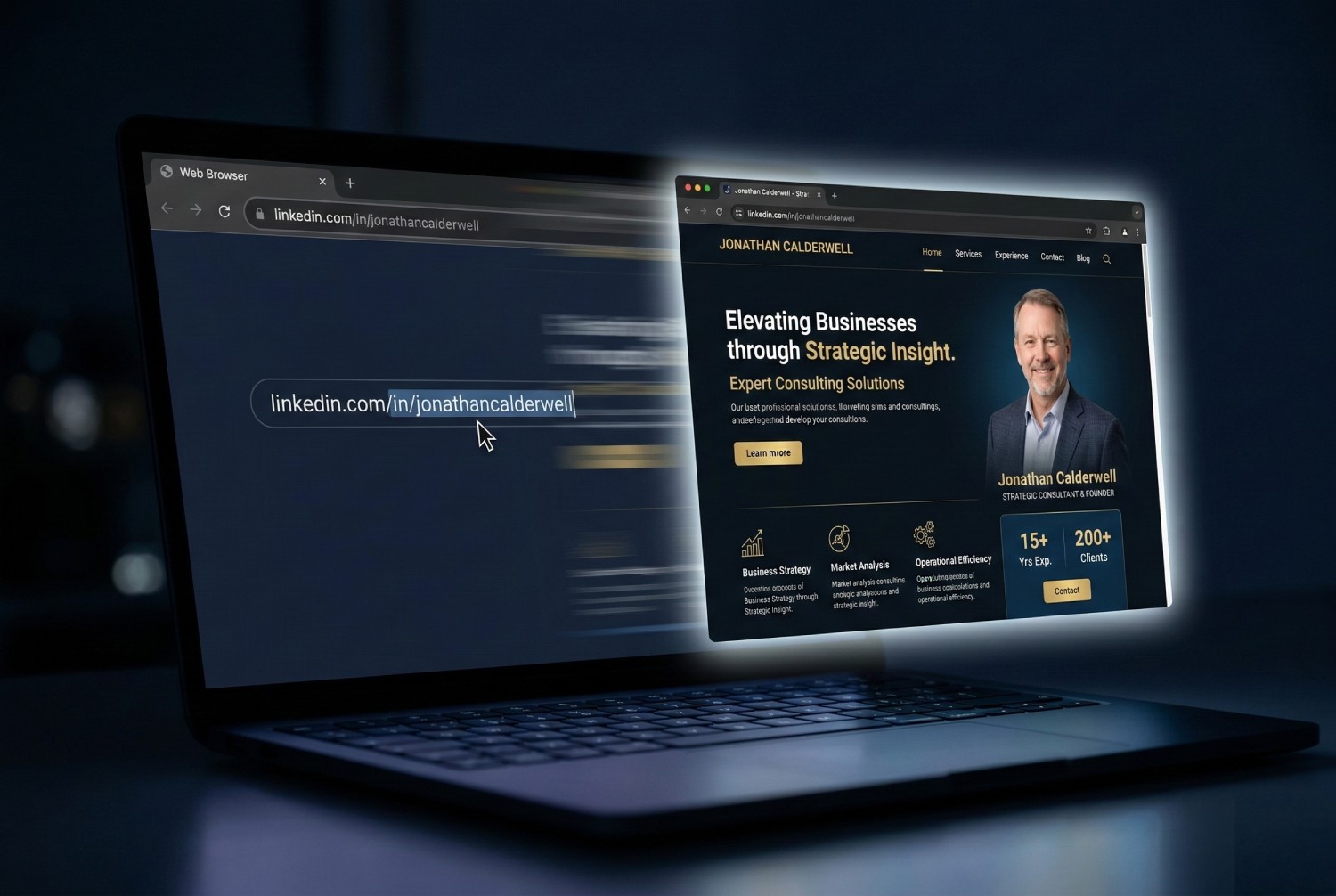
For most consultants, a referral is not the end of the buying process. It is the beginning of private research. Someone hears your name, opens a browser, and tries to answer a simple question before they reply: does this person feel credible for the problem I need solved?
That is why a professional website matters. It is not just an online placeholder. It is the fastest way to help a serious prospect understand who you help, what kind of work you do, and why a conversation with you is worth having.
What happens after someone hears your name
Imagine a founder gets your name from an investor, or a leadership team hears about you from a board member. That introduction creates interest, but interest still needs context. Before they book a call, most buyers want to see a clear explanation of your work and a few signals that you are credible.
If they find only a fragmented profile or a scattered digital footprint, they have to do the interpretation themselves. If they find a focused website, the story is already organized for them.
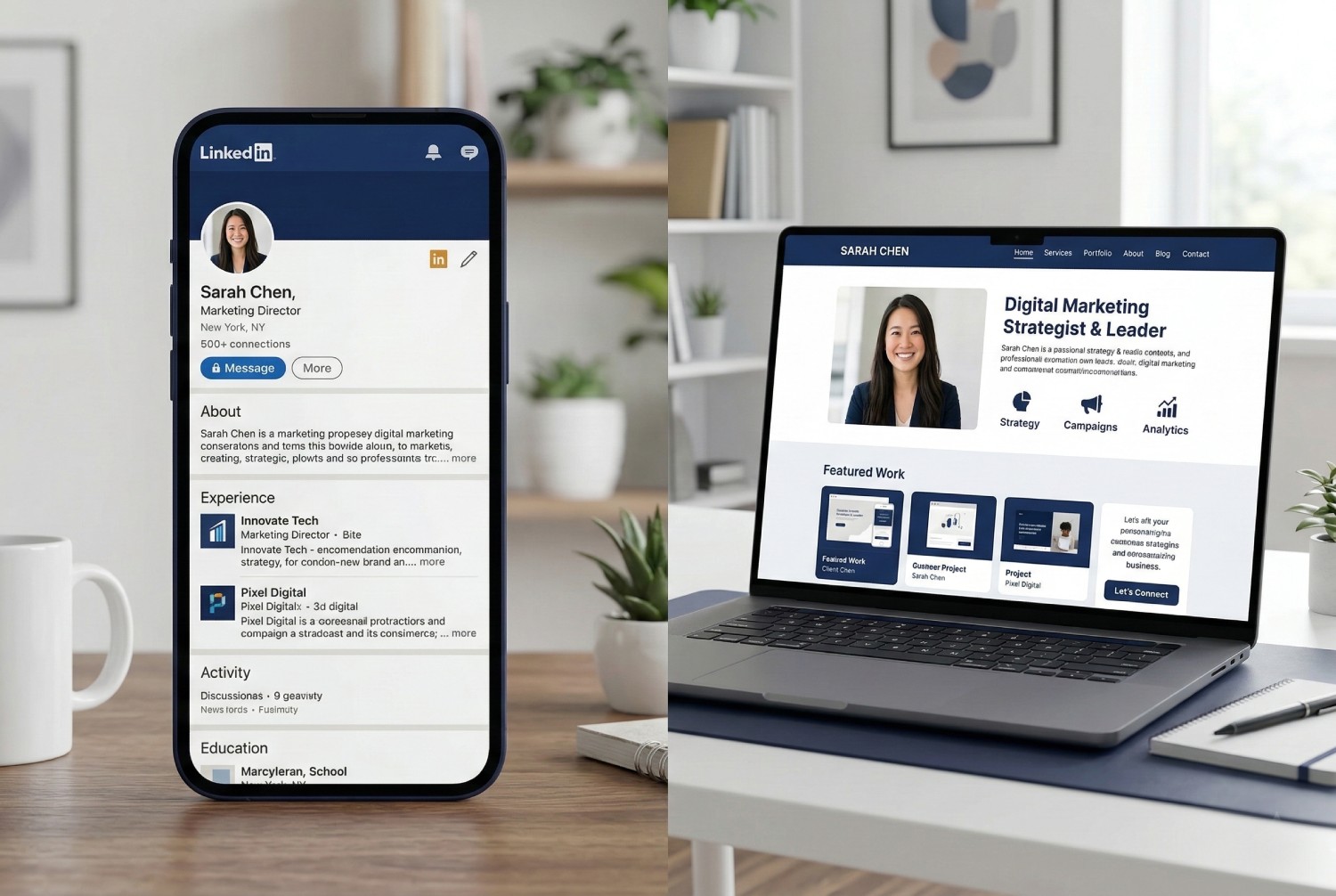
Why LinkedIn alone is not enough
LinkedIn is useful. It can show your background, help people verify that you are real, and create discovery through your network. But LinkedIn is not built to present your work in the order a buyer actually cares about.
- It gives limited control over structure and hierarchy.
- It makes it harder to lead with proof and client relevance.
- It does not create a clean path from fit to trust to action.
- It looks similar to thousands of other professional profiles.
A website gives you control over the reading path. That matters because buyers do not want to piece your value together from scattered sections. They want a quick, confident answer.
The four jobs a consultant website should do
1. Create clarity
A strong website translates your experience into client language. Instead of listing roles and achievements without context, it makes your relevance obvious. The visitor should understand who you help, what problems you solve, and how your work is different.
2. Build trust
Trust grows faster when proof is easy to find. A short testimonial, a clear client type, or a concise explanation of how you work often does more than a long biography. Buyers want signs that someone like them can trust you.
3. Guide action
A website lets you shape the flow from attention to next step. You can lead with fit, follow with proof, explain the offer clearly, and make the call to action obvious. That is one of the biggest commercial advantages of having your own site.
4. Support search over time
Your website can also attract people who were not already in your network. Service pages, role-specific positioning, and focused articles give search engines something to rank and buyers something to discover. That is how your reputation starts working beyond direct referrals.
What buyers look for in the first minute
Most visitors are not looking for every detail immediately. They want enough to decide whether they should keep reading. In practice, that usually means they are scanning for the same signals:
- Who is this for?
- What kind of outcomes does this person help create?
- Is there enough proof to trust you?
- What should I do next if I want to talk?
If your website answers those questions quickly, it lowers friction. If it makes those answers hard to find, the prospect often delays or leaves.
What a consultant website does not need to be
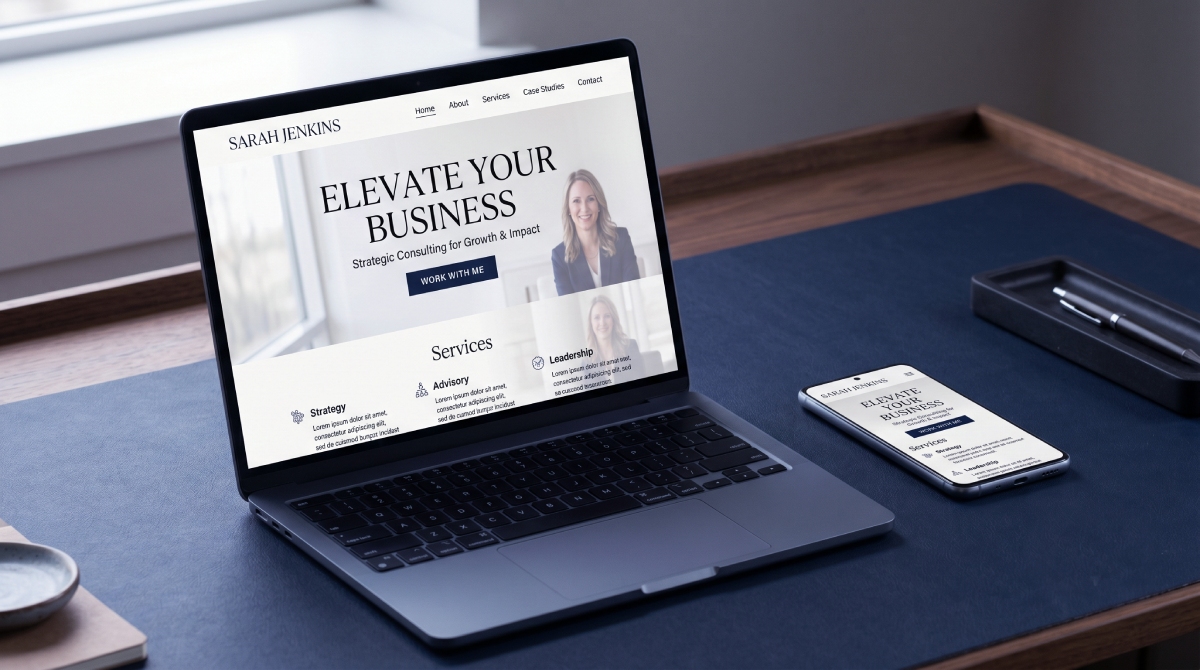
A useful consultant website does not have to be huge. It does not need dozens of pages, heavy animations, or constant updates. In many cases, a concise site with a clear message, a few trust signals, and one simple next step performs better than a larger site with scattered content.
The goal is not visual complexity. The goal is decision-making clarity.
The minimum a good consultant website needs
If you are keeping things simple, focus on the essentials:
- A clear opening section that says who you help and what you help with.
- A short explanation of your offer or service shape.
- Proof in the form of testimonials, outcomes, or relevant experience.
- A straightforward call to action.
- A structure that is easy to scan on mobile and desktop.
That is often enough to turn curiosity into a real conversation.
Final takeaway
A professional website helps your reputation land faster. It gives prospects a place where your work is explained clearly, trust is easier to build, and the next step feels obvious. For consultants, coaches, and fractional leaders, that makes it one of the most practical assets you can build.
If someone hears your name today and searches for you tonight, what they find should make it easier to say yes to the next conversation. That is what a strong professional website is for.